Gold IRA vs Gold ETF: 6 Differences That Actually Matter
I have owned both a gold IRA and gold ETFs. Here are the 6 differences that changed how I invest, from fees and taxes to what happens in a real crisis.
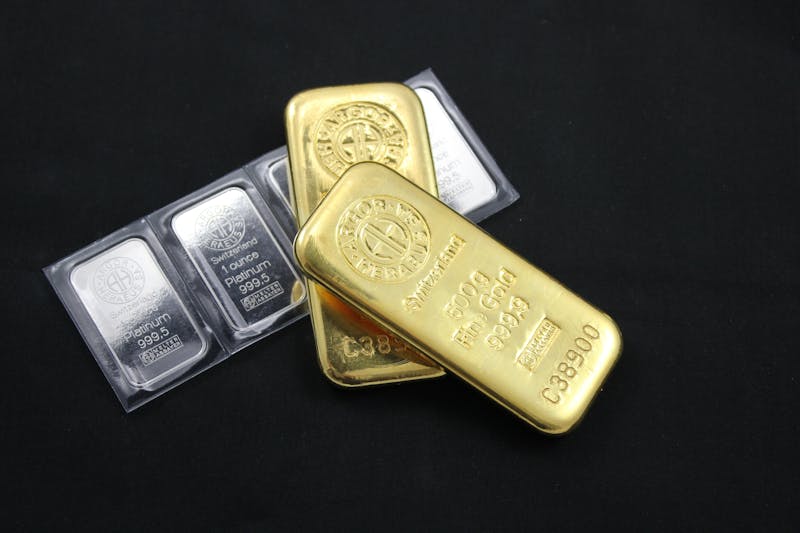
I own physical gold inside a self-directed IRA. I have also held GLD in a brokerage account. Both give you exposure to gold prices. But after living with both for over two years, I can tell you they are fundamentally different animals, and picking the wrong one can cost you thousands in fees, taxes, or missed opportunity.
Quick bottom line: I prefer physical gold in an IRA for money I will not touch for 10+ years. I prefer the ETF for short-term positions and liquidity. Most people reading this are choosing between these two for retirement savings, and for that purpose, the IRA wins in my opinion. But the ETF has real advantages I am not going to pretend do not exist.
1. Physical Ownership vs. a Paper Claim on Gold
This is the difference everything else flows from.
With a gold IRA, you own specific coins or bars. American Gold Eagles, Canadian Maple Leafs, PAMP Suisse bars. They sit in an IRS-approved depository with your name on the account. If you choose segregated storage (which I did), your exact metals are kept separate from everyone else's. When you take a distribution in kind someday, you receive the actual coins you purchased.
With a gold ETF like GLD, you own shares in a trust that holds gold bars in a vault. You have no claim on any specific bar. You cannot request delivery unless you hold 100,000 shares, which at roughly $240 per share means you need about $24 million. You own a financial instrument that tracks the price of gold.
I started buying GLD in 2021 because it was easy. Three clicks in my brokerage account and done. But as I dug deeper, I realized I was trusting a chain of counterparties to honor my claim: the ETF sponsor, the custodian bank (HSBC for GLD), sub-custodians, and my brokerage. Physical gold in an IRA cuts most of that chain. The metal exists. It is in a vault. It is mine.
If you are buying gold specifically because you want something outside the traditional financial system, the ETF only halfway gets you there.
2. Annual Fees: The Gold IRA Costs More (But the Math Shifts Over Time)
Let me be blunt. A gold IRA is more expensive. Here are real numbers from my accounts.
My gold IRA: $100 annual custodian fee plus $150 segregated storage. About $250 per year, or 0.5% of my $50,000 account.
GLD: 0.40% expense ratio deducted from the share price. On $50,000, that is about $200 per year. No separate fees.
The gap is smaller than people assume. And here is the twist: IRA fees are flat dollar amounts. ETF fees are a percentage that grows with your balance. If gold doubles and your account hits $100,000, the IRA still costs $250. The ETF costs $400. At larger account sizes, the IRA can actually be cheaper.
The real cost difference is the dealer markup when you first buy metals: typically 3% to 8% over spot price. On $50,000, that is $1,500 to $4,000 in spread. ETF shares trade at market price with a brokerage commission that is often zero. That upfront cost is the honest reason people hesitate on gold IRAs.
My take: if you plan to hold for a decade or more, the markup amortizes and the flat fee structure works in your favor. Selling in two years? The ETF's lower entry cost wins. For a more detailed breakdown of gold IRA costs, see my hidden gold IRA fees guide.
3. Counterparty Risk: Who Are You Actually Trusting?
Every investment involves trust. The question is how long the chain is.
Gold ETF chain: ETF sponsor, custodian bank, sub-custodians, authorized participants, your brokerage firm. Five links.
Gold IRA chain: Your self-directed IRA custodian and the depository. Two links. Neither owns your gold; they just hold it. If either goes bankrupt, your metals transfer to a new custodian or facility. This has actually happened before, and investors kept their holdings.
GLD's prospectus includes disclaimers about sub-custodians, insurance limitations, and the fact that gold held by sub-custodians may not be segregated from the custodian's own gold. I read that section three times, and each time it made me less comfortable. The gold probably exists. The chain of custody probably works. But there are enough "probablys" that I wanted something more direct for my retirement savings.
In fairness: GLD has operated since 2004 without a reported instance of gold going missing. Twenty-plus years of clean operation counts for something. I am not calling it a scam. I am saying the counterparty structure is more complex, and that complexity carries a cost you cannot measure until something breaks.
4. Liquidity: The ETF Wins, and It Is Not Close
If you need to sell gold quickly, the ETF beats the IRA by a wide margin. I want to be straightforward about this because it is the ETF's strongest advantage.
Selling GLD takes seconds. Open your brokerage app, hit sell, have cash in your bank account within days. No phone calls. No paperwork.
Selling gold from an IRA is a multi-step process. Contact your dealer or custodian, wait for the depository to verify and release the metals, then receive proceeds in your IRA (or as a taxable distribution). Dealers estimate three to seven business days. Some readers have told me it took two weeks.
For retirement savings you will not touch for years, this speed difference is irrelevant. But if you want the option to sell during a price spike on a Tuesday afternoon, the ETF gives you that.
Worth noting: you could hold a gold ETF inside a regular IRA at Schwab or Fidelity. That gives you the tax shelter plus the ETF's liquidity. You lose physical ownership, but you gain the ability to rebalance quickly. Reasonable approach for some people.
5. Tax Treatment: Collectibles Tax vs. IRA Tax Shelter
This one surprised me, and it might be the strongest argument for holding gold inside any type of IRA.
Gold ETF in a taxable account: The IRS classifies gold ETFs as collectibles. Long-term capital gains get taxed at 28%, not the 15% or 20% rate that applies to stocks. On a $10,000 gain, that is $2,800 in federal tax instead of $1,500 to $2,000. A meaningful headwind.
Traditional gold IRA: No taxes while gold sits in the account. Distributions in retirement get taxed at your ordinary income rate. If you are in the 22% bracket, you pay 22% instead of 28%. Lower bracket? Even better.
Roth gold IRA: This is where the math gets attractive. After-tax dollars go in. The gold appreciates. Qualified distributions come out completely tax-free. Zero percent. If gold doubles over 20 years, that entire gain is untaxed. I moved a portion of my holdings into a Roth for exactly this reason. I cover all seven tax advantages in my gold IRA tax benefits guide.
Gold ETF inside a regular IRA: Same tax shelter as a gold IRA. The 28% collectibles rate does not apply because you never sell in a taxable account. This is a legitimate strategy that skips the higher fees of a physical gold IRA while avoiding the collectibles tax.
The tax question comes down to where you hold the gold. Inside any IRA, both options get similar treatment. Outside an IRA, the 28% rate on gold ETFs hurts. For rollover mechanics to get money into either account type, see my gold IRA rollover guide.
6. What Happens in a Systemic Crisis
This is the difference that personally tipped the scales for me.
People buy gold as insurance against scenarios where everything else falls apart. Currency crisis. Banking system stress. The 2008 meltdown. March 2020. Those moments when you turn on CNBC and the anchor looks like they have not slept in three days.
In those exact moments, how does each option behave?
The gold ETF trades on a stock exchange. If the exchange halts trading (which has happened), you cannot sell. If your brokerage freezes withdrawals (Robinhood restricted trading during the GameStop squeeze in 2021), you cannot access your shares. The very infrastructure you need to sell the ETF is the same infrastructure that comes under stress during a crisis.
Physical gold in a depository still sits there. You may not be able to sell it instantly. But the metal does not disappear. No exchange can halt trading in your vault. The gold is physically present, owned by you, and independent of the electronic systems that might be failing.
Am I predicting a financial system collapse? No. I think it is unlikely. But unlikely is not impossible, and the whole point of buying gold is to own something that works when the unlikely happens. If your gold exposure fails during the exact crisis it is supposed to protect against, what is the point?
This argument has limits. In most downturns, even 2008, gold ETFs traded normally. I am talking about tail risk, not a base case. But tail risk is literally why most people want gold.
Quick Comparison Table
| Factor | Gold IRA (Physical) | Gold ETF (GLD/IAU) |
|---|---|---|
| What you own | Specific coins and bars in a vault | Shares in a trust holding gold bars |
| Annual cost ($50K) | ~$250/year flat | ~$200/year (scales with balance) |
| Upfront cost | 3-8% dealer markup | Minimal (brokerage commission) |
| Counterparty risk | Lower (2 intermediaries) | Higher (5 intermediaries) |
| Liquidity | 3-14 business days | Seconds during market hours |
| Tax (Roth IRA) | Tax-free gains | Tax-free gains |
| Tax (taxable account) | N/A (IRA only) | 28% collectibles rate |
| Crisis resilience | Independent of market infrastructure | Depends on exchange and broker access |
| Minimum investment | $10,000-$50,000 by dealer | Price of one share (~$240) |
Frequently Asked Questions
Can I hold a gold ETF inside my gold IRA?
Some self-directed IRA custodians allow it, but it defeats the purpose. If you want a gold ETF in a tax-advantaged account, a standard IRA at any major brokerage works fine and costs less. Save the self-directed IRA for physical metals.
Is a gold ETF safer than a gold IRA?
Depends on your definition. The ETF is safer in terms of liquidity risk; you can sell instantly. The gold IRA is safer in terms of counterparty risk; you own physical metal, not a paper claim. The risks are different in kind, not greater or lesser.
Can I convert gold ETF holdings into a gold IRA?
Not directly. You sell the ETF shares, transfer cash into a self-directed IRA via contribution or rollover, then purchase physical gold through a dealer. If the ETF is already inside an IRA, you could do a custodian-to-custodian transfer and buy physical gold with the proceeds.
How much of my portfolio should be in gold?
Most financial advisors I respect suggest 5% to 15%. I sit around 15% across all my accounts, split between the gold IRA and ETF positions. Above 20% starts to hurt growth from equities. Below 5% and you barely notice the diversification benefit.
My Final Take
This is not a case where one option is objectively better. I think the best approach for many investors is both: a gold IRA for long-term retirement savings, an ETF for flexibility and tactical positions.
If you can only pick one for retirement, I lean toward the physical gold IRA. The ownership is more direct. The tax advantages are identical inside an IRA (and superior in a Roth). The crisis-resilience argument aligns with the reason most people buy gold in the first place. For retirement savings of $25,000 or more with a decade-plus horizon, I believe physical gold is the stronger choice.
The ETF is not wrong. For smaller amounts, shorter horizons, and investors who prioritize simplicity, it makes perfect sense. I just think the people reading this page are mostly trying to protect retirement savings for the long haul, and for that goal, I want my gold to actually exist in a vault with my name on it.
Ready to explore a physical gold IRA? These are the three dealers I have personally researched. Request their free information kits, compare pricing and minimums, and choose the one that fits.